Intrusion Detection - Comparative ML Study
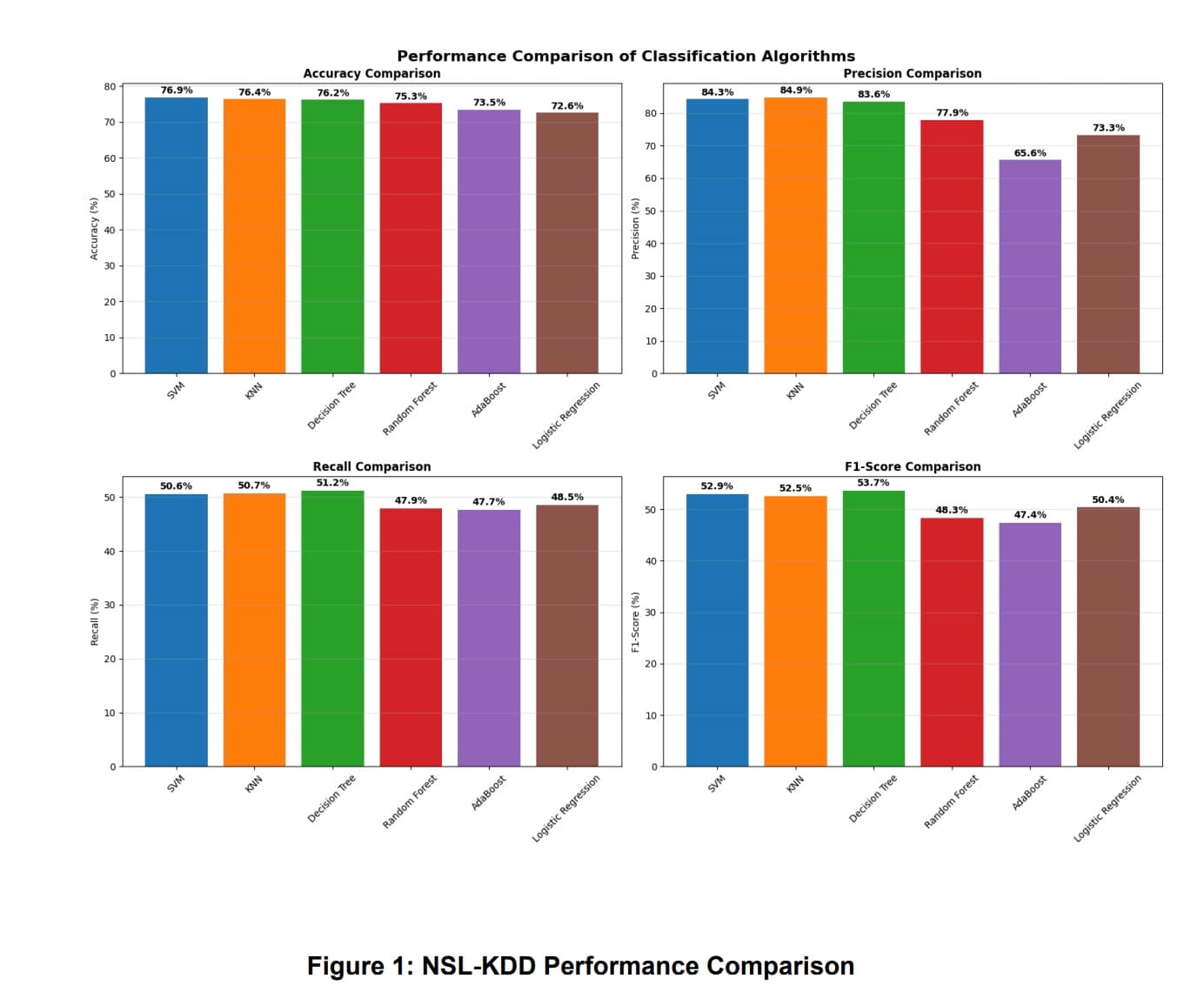
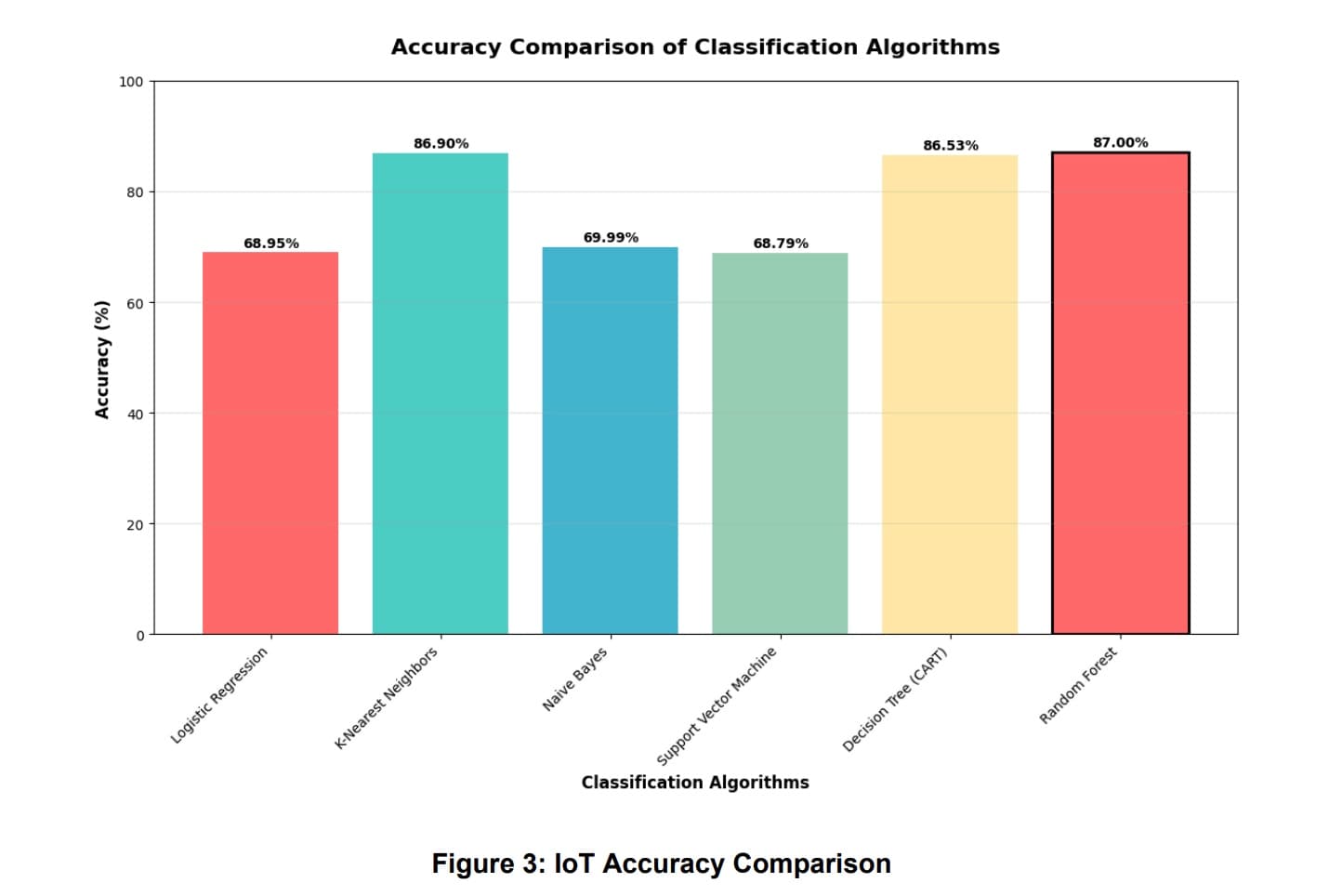
Compared 7 classification algorithms for network intrusion detection, reaching 90% accuracy with Random Forest and DNN.
Overview
A cybersecurity research project addressing the need for intelligent network threat detection, comparing 7 classification algorithms to identify malicious network activity.
The problem
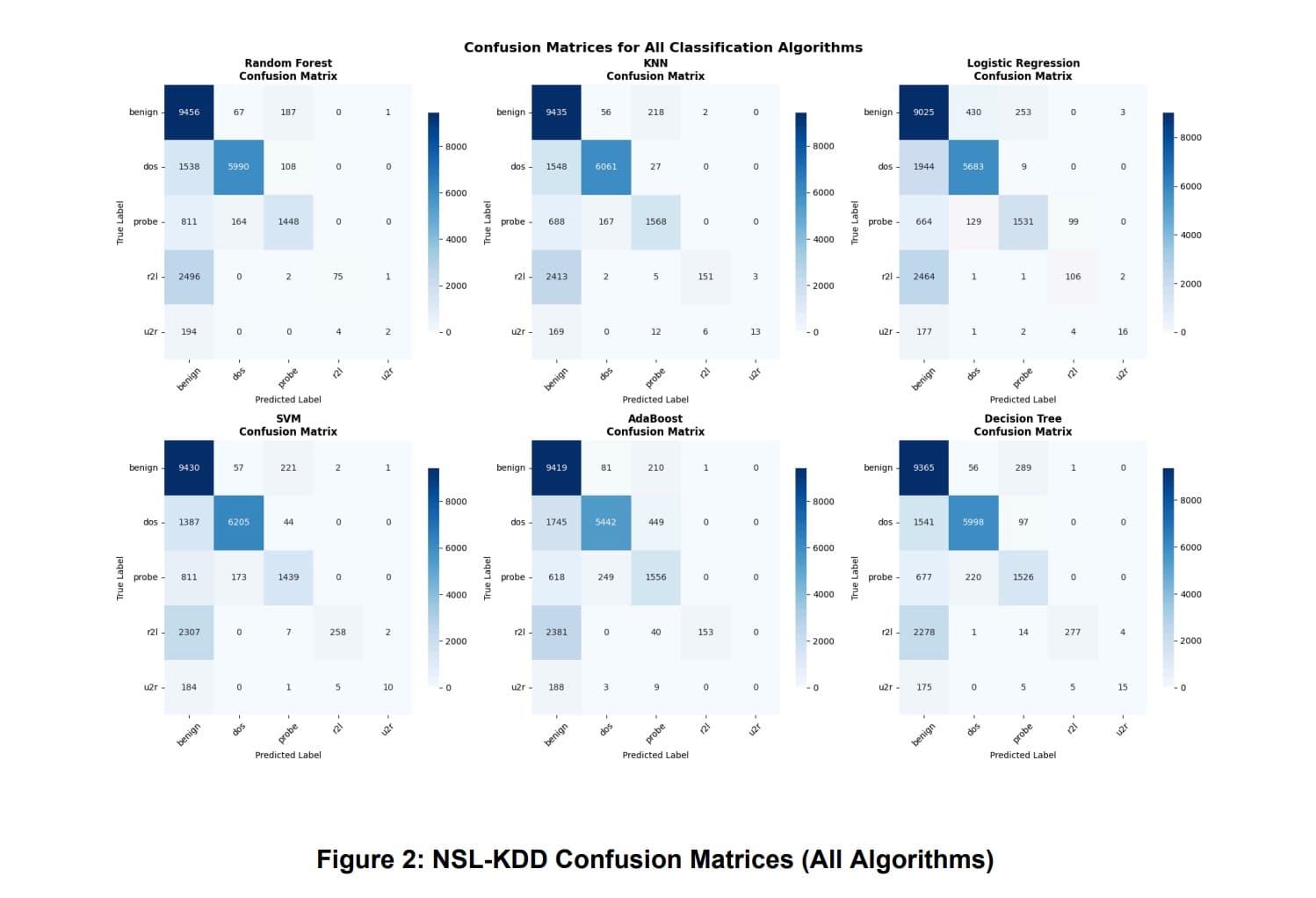
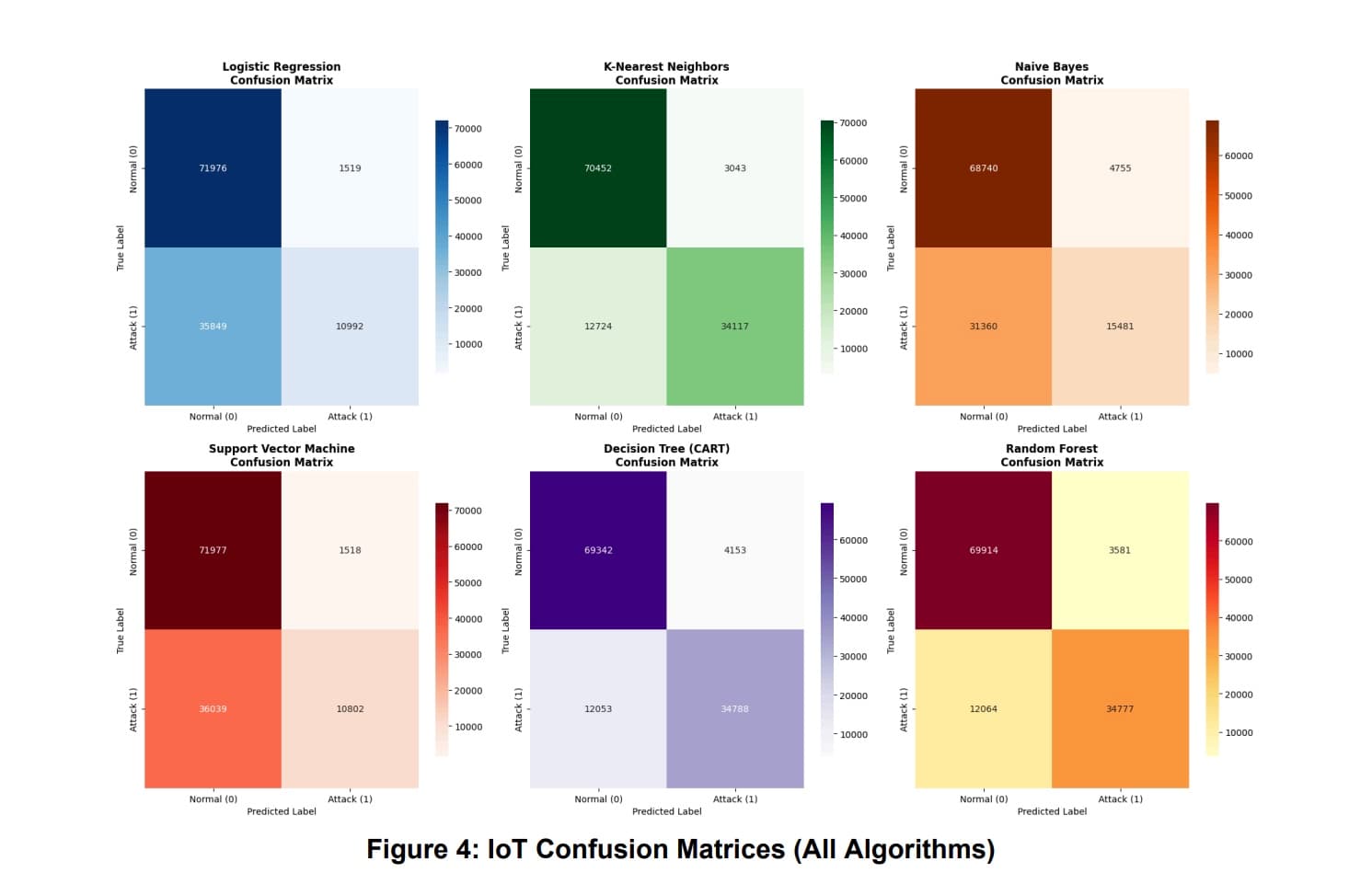
Networks need to detect malicious activity (DoS, Probe, R2L, U2R attacks) in real time, including modern IoT-based threats, without generating so many false positives that analysts suffer alert fatigue.
My approach
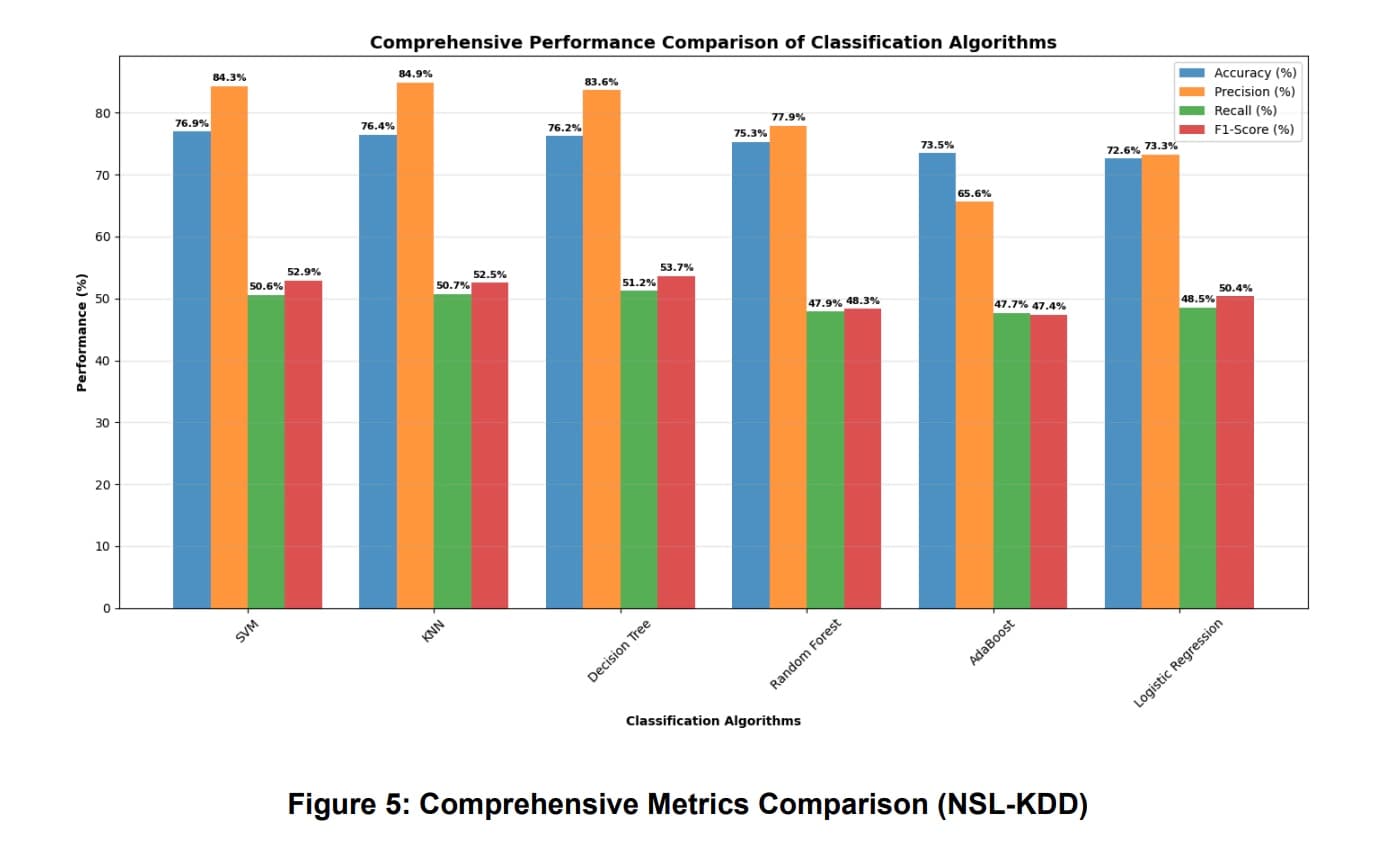
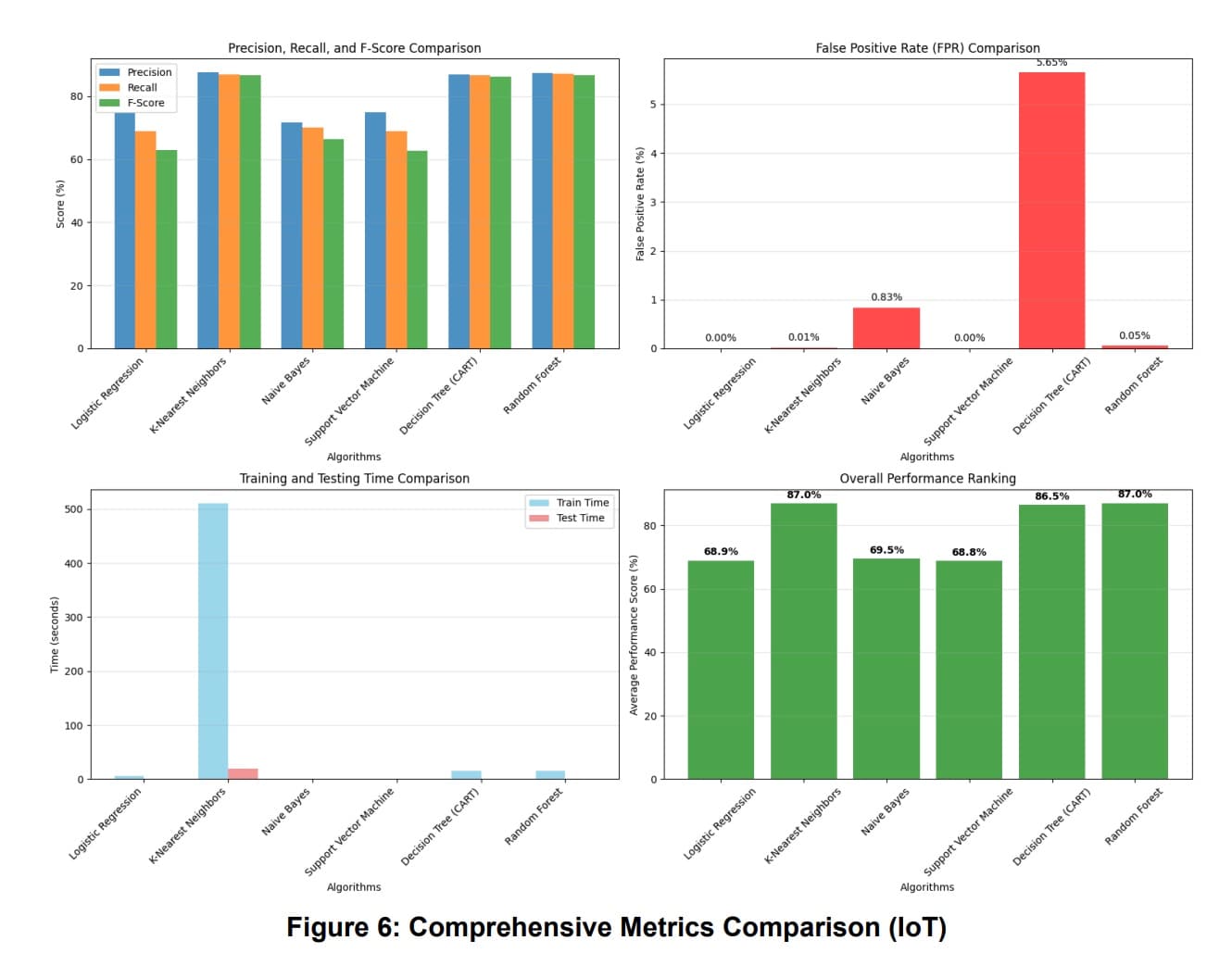
Developed and evaluated a machine learning pipeline comparing Random Forest, Deep Neural Network, SVM, Naive Bayes, Decision Tree, Logistic Regression, and KNN classifiers against the NSL-KDD and IoT-specific datasets, then optimised for false-positive rate to keep the models usable in production monitoring.